Open mobile app

Customer supportTypically replies within a few minutes
Need help with placing an order, delivery, or something else? Start with our Help Page — or message us anytime for support.
Not available for delivery - In-store only
Overview:
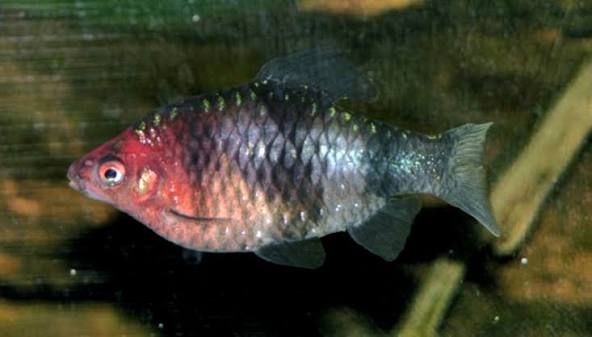
The Black Ruby Barb (also known as the Purple Headed Barb) is a stunning, often overlooked gem of the barb family. As juveniles or females, they look somewhat similar to Tiger Barbs, displaying a yellowish-gold body with three vertical black bars. However, when mature males enter breeding condition, they undergo a transformation: their front head and snout flush into a deep, glowing ruby-red, while the rest of their body turns a velvet, ink-like jet black.
Origins:
They are endemic to the shaded, slow-moving rainforest streams and hill rivers of Sri Lanka (specifically the Kelani to Nilwala river basins). They naturally thrive under dense jungle canopies in soft, slightly acidic water running over beds of fallen leaves and smooth gravel.
Personality:
Unlike their notoriously mischievous and nippy cousins, the Tiger Barbs, Black Ruby Barbs are significantly calmer, more polite, and far less aggressive. They are active, tight-schooling mid-water dwellers that bring fantastic energy to a tank without the constant fin-nipping drama. Males will regularly display harmless "sparring" dances alongside each other—flaring their fins and intensifying their red head coloration to impress the females.
Care Level: Very Easy
Temperament: Peaceful to semi-aggressive (Extremely mild compared to Tiger Barbs)
Diet: Omnivore (Unfussy, enthusiastic eaters. Thrives on high-quality flakes, micro-pellets, and regular treats of frozen bloodworms, daphnia, and brine shrimp. They also appreciate vegetable matter like spirulina or blanched spinach).
Max Size: 6 – 6.5 cm
Family: Cyprinidae
Tank Size: 100 Litres minimum for a school. (Prioritize a long footprint to give them plenty of horizontal swimming space).
Temperature: 22°C – 26°C
pH: 6.0 – 7.5
Should be kept in groups? Yes, strictly. They must be kept in a group of at least 6 to 8 (10+ is ideal). Keeping them in a large school keeps any internal hierarchy squabbles within their own group and encourages the males to show off their brightest ruby-red coloration.
To bring out their absolute deepest blacks and brightest reds, model their habitat around their native Sri Lankan streams:
1. Dark Substrate & Plant Cover: Bright, bare tanks with white gravel will wash out their colors. Use a dark substrate (like black sand or dark soil) alongside dense live planting (Java Fern, Cryptocorynes, Anubias) and driftwood. Over a dark backdrop, their colors will practically glow.
2. Excellent Tank Mate Choices: Because they lack the severe nipping tendencies of Tiger Barbs, they make outstanding community fish. Great tank mates include Rainbowfish, Gouramis, Corydoras Catfish, Tetras, Rasboras, and Peaceful Loaches.
Need help with placing an order, delivery, or something else? Start with our Help Page — or message us anytime for support.