Open mobile app

Customer supportTypically replies within a few minutes
Need help with placing an order, delivery, or something else? Start with our Help Page — or message us anytime for support.
NOT AVAILABLE FOR SHIPPING - In-store Only
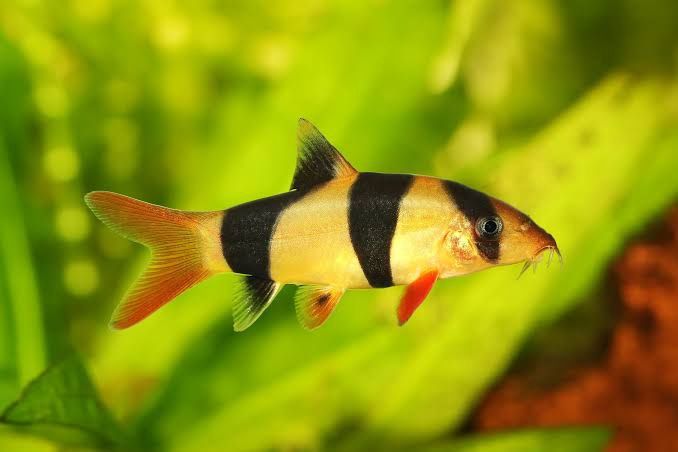
Overview: The Clown Loach is one of the most recognizable, colorful, and popular bottom-dwellers in the entire aquarium hobby. It features an elongated, sleek body with a striking orange background sliced by three thick, jet-black vertical bands. Their fins are a vibrant, fiery red-orange, and their mouths are surrounded by small, sensitive whiskers (barbels) that they use to hunt for food along the substrate.
Origins: They are native to the large, fast-flowing river systems of Sumatra and Borneo in Indonesia. While juveniles are easily found in small creeks, adults migrate into flooded forest canopy areas during the monsoon season to breed.
Personality: Clown Loaches are often described as the "court jesters" of the aquarium world. They are highly intelligent, playful, and packed with personality. Unlike many nocturnal loaches, Clown Loaches are active during the day and love to play follow-the-leader, swimming in tight, energetic groups. They also have a couple of famous, slightly heart-stopping behavioral quirks (see the warnings below!).
Care Level: Intermediate (Due to their large ultimate size and susceptibility to disease)
Temperament: Peaceful but active
Diet: Omnivore/Molluscivore (Sinking pellets, algae wafers, frozen bloodworms, and fresh vegetables. They are the ultimate weapon against pest snails, readily crushing and eating bladder, ramshorn, and trumpet snails!)
Max Size: 25 – 30 cm (A major "buyer beware"—they start tiny at 5 cm but grow into massive, chunky fish!)
Family: Botiidae
Tank Size: 300 – 400 Litres minimum for a group of adults. They need massive horizontal swimming room.
Temperature: 25°C – 30°C (They prefer warmer tropical water)
pH: 6.0 – 7.5
Should be kept in groups? Yes, strictly. They are highly social pack animals and must be kept in a group of at least 5 or 6. If kept alone or in a pair, they become severely stressed, waste away, or turn aggressive out of fear.
1. The "Playing Dead" Trick: Do not panic if you look into your tank and see your Clown Loaches lying completely flat on their sides on the gravel, or upside down stuck in a plant. They are not dead! Clown Loaches are famous for sleeping in bizarre positions. They will casually "wake up" and swim off as if nothing happened.
2. Sub-Ocular Spines: Right beneath their eyes, Clown Loaches possess a hidden, razor-sharp spine that can pop out when they feel threatened. Just like the Chocolate Stripe Catfish, never catch them with a mesh net, as these eye-spines will instantly get tangled. Use a smooth plastic container instead.
3. The "Ich Magnet": Because they have microscopic, embedded scales (making them look "scaleless"), they are highly vulnerable to White Spot Disease (Ich). Ensure your water is kept pristine and warm to protect them.
Need help with placing an order, delivery, or something else? Start with our Help Page — or message us anytime for support.