Open mobile app

Customer supportTypically replies within a few minutes
Need help with placing an order, delivery, or something else? Start with our Help Page — or message us anytime for support.
NOT AVAILABLE TO SHIP - In-store Only
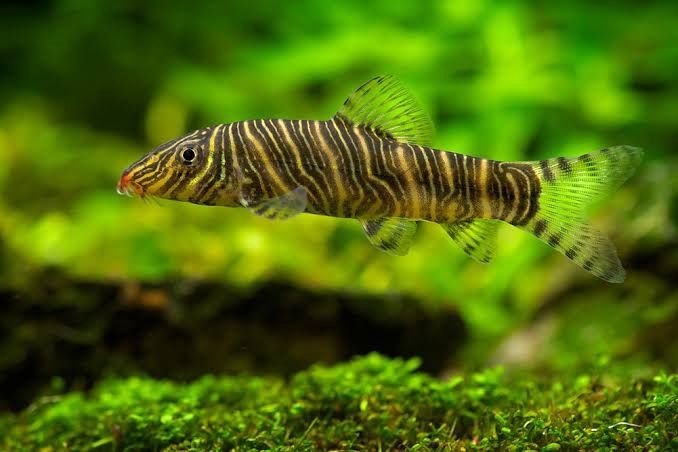
Overview: The Zebra Loach (also known as the Candystripe Loach) is one of the most highly recommended, manageable, and exquisitely patterned members of the Botiidae family. True to its name, it features a spectacular, dense maze of alternating vertical lines of creamy-yellow, dark chocolate, and metallic green-to-blue. Unlike the massive Clown Loach, the Zebra Loach stays beautifully small and compact, making it a dream choice for standard-sized community aquariums.
Origins: They are native to the Western Ghats mountain range in Southern India (primarily found in the Tunga and Krishna river systems). They inhabit clear, highly oxygenated mountain streams and pools shaded by heavy forest cover, usually navigating riverbeds composed of smooth rocks, sand, and submerged leaf litter.
Personality: Zebra Loaches are curious, highly energetic, and wonderfully playful. They are busy bottom-dwellers that spend all day closely exploring cracks, caves, and searching the substrate for food. While they are bold and active, they are significantly more peaceful and less boisterous than other medium loaches (like the Yoyo or Skunk Loach).
Care Level: Easy to Intermediate (Requires a well-matured, stable aquarium)
Temperament: Peaceful and community-friendly
Diet: Omnivore/Carnivore (Sinking catfish pellets, flakes, and frozen foods like bloodworms or brine shrimp. They are superb at eating pest snails like bladder and ramshorn snails, making them a fantastic, size-appropriate alternative to Clown Loaches!)
Max Size: 8 – 10 cm
Family: Botiidae
Tank Size: 115 – 120 Litres minimum (To accommodate a proper social school and their active swimming habits)
Temperature: 22°C – 26°C * pH: 6.0 – 7.5
Should be kept in groups? Yes, strictly. Zebra Loaches have a highly complex social hierarchy. They must be kept in a group of at least 5 to 6. Keeping them in a large school dilutes their minor internal dominance disputes, prevents them from getting stressed or skittish, and prompts them to be much bolder during daytime hours.
The "Greying Out" Custom: Don't be alarmed if you occasionally see two of your Zebra Loaches circling each other, spreading their fins wide, and fading to a pale grey color while making quiet "clicking" sounds. This is completely natural behavior called "greying out," which they use to settle minor rank arguments within the school.
Substrate & Lids: Just like other scaleless bottom-dwellers, they require smooth sand or rounded gravel to protect their delicate mouth barbels. They are also highly inquisitive and can jump when excited, so a tight-fitting aquarium lid is a must!
Need help with placing an order, delivery, or something else? Start with our Help Page — or message us anytime for support.