Open mobile app

Customer supportTypically replies within a few minutes
Need help with placing an order, delivery, or something else? Start with our Help Page — or message us anytime for support.
NOT AVAILABLE TO SHIP - In-store Only
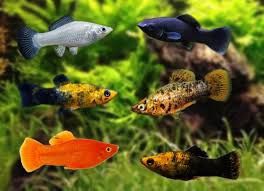
The "Assorted Molly" refers to various species and hybridized forms of mollies (Poecilia genus) that are sold together, showcasing a wide array of colors, patterns, and fin shapes. Originally hailing from freshwater, brackish, and even saltwater coastal waters of the Americas (from Mexico to Colombia), mollies have been extensively line-bred for their stunning diversity. Common species include the Sailfin Molly (P. latipinna, P. velifera), Shortfin Molly (P. sphenops), and Yucatan Molly (P. mexicana).
Their appearance can vary wildly:
Mollies are livebearers, meaning they give birth to free-swimming fry, not eggs. They are active, generally peaceful, and their constant movement and varied beauty make them a lively addition to suitable community aquariums.
Assorted Mollies are generally considered easy to moderate in care. While hardy and adaptable, their preference for slightly harder, more alkaline, and sometimes brackish water means they thrive best when these specific conditions are met. Consistent water quality is key to preventing common Molly ailments like fin rot and ich.
Mollies are predominantly peaceful, especially females. Males, however, can exhibit territoriality and will constantly pursue females for breeding. To prevent stress on females from this persistent attention and to minimize male-on-male aggression, it is crucial to keep them in groups with a ratio of at least 2-3 females for every male. A male-only tank can also work to avoid breeding and reduce chasing behavior.
Good tank mates include other peaceful, similarly sized fish that prefer similar water conditions (slightly harder, more alkaline water). Compatible companions include:
Avoid very timid fish (as active mollies can stress them) and aggressive or fin-nipping species (as mollies' fins can be tempting targets).
Mollies are omnivores with a significant dietary need for vegetable matter. In the wild, they graze on algae and detritus.
Feed small amounts 2-3 times daily, ensuring they consume the food within a few minutes. Overfeeding can lead to poor water quality.
Mollies vary significantly in size depending on the specific species and genetics. Shortfin Mollies typically reach 7-10 cm, while Sailfin varieties can grow up to 15 cm or even slightly larger, especially the males with their impressive dorsal fins.
Due to their potential size, activity levels, and breeding habits, mollies require adequate space. A 60-liter tank can house a small group of smaller molly varieties. For larger Sailfin Mollies, or for a more robust community with multiple mollies, a 110-liter (30 US Gallons) or larger aquarium is highly recommended. Provide a well-planted tank with plenty of open swimming areas, as well as hiding spots among vegetation. A tight-fitting lid is advisable as they can sometimes jump.
Need help with placing an order, delivery, or something else? Start with our Help Page — or message us anytime for support.